
Cat Hop - Dancing Music Games
Cobby LabsMusic
4.768.00 Reviews
- Version
- 0.3.4
- Installs
- 1.00M
- Age Rating
- Everyone
Screenshots
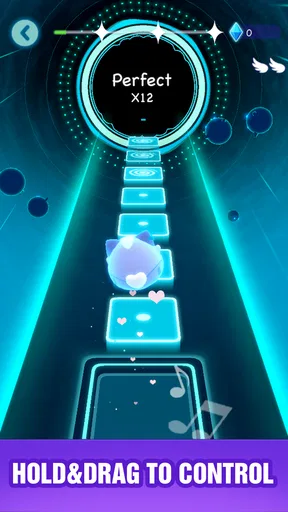




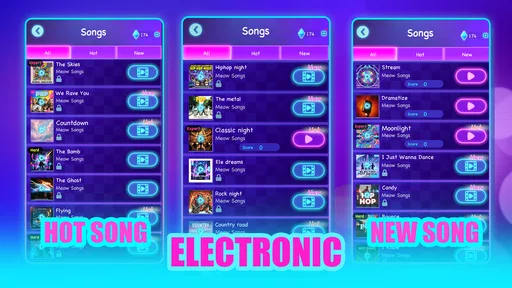
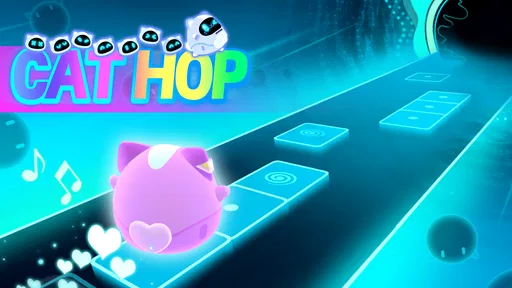
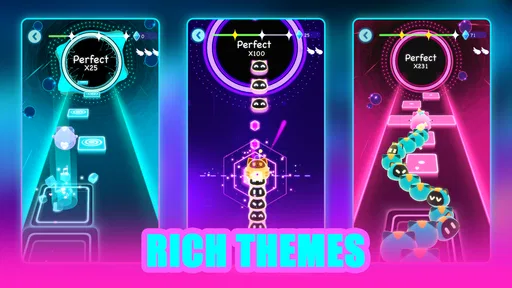
Our Review of Cat Hop - Dancing Music Games
 Analysis by Appyee
Cat Hop - Dancing Music Games caught my attention because it takes a familiar rhythm-game idea and puts it in a much softer, sillier setting: cats moving through piano-style play and meowing along with the beat. After spending time with it, I found that its biggest strength is not complexity. It is the way the art, sound, and simple timing challenges work together to create a light mood that is easy to enter.
This is a free music game from Cobby Labs, aimed at Everyone and available for devices running Android 7.0 or later. Its store presence shows a 4.7 average from around 14 thousand ratings, with over one million installs, so it has clearly found an audience beyond a tiny novelty experiment. I can understand why: the premise is immediately readable, the cat theme does most of the emotional work, and a short session does not demand a large commitment.
Still, I would not recommend it to everybody who enjoys music games. Players looking for deep song practice, difficult note patterns, competitive ranking systems, or a serious rhythm challenge may find the experience too gentle. For someone who wants a cheerful break, though, the combination of cute presentation and low-pressure timing play is the real appeal.
How the first few sessions feel
My first impression was that Cat Hop understands the value of an uncomplicated opening. The game does not need a complicated explanation to communicate what it wants from me: watch the movement, follow the rhythm, and keep the cat progressing through the musical scene. That clarity matters on a phone, where I may be playing with one hand while waiting for a bus or taking a short break between tasks.
The cat-centered presentation makes the game feel friendlier than a conventional piano-tile title. Instead of presenting the screen as a strict test of accuracy, it frames each attempt as a small performance. I am still responding to timing, but the visual language makes mistakes feel less like failure and more like part of a playful routine. That distinction is important for younger players and for adults who do not want another demanding game competing for their attention.
The free price also lowers the barrier to trying it. I can see this working well as a casual download for a family tablet, a quick distraction during a quiet evening, or a game to keep available for short sessions. The Everyone rating supports that broad accessibility, although parents should still judge whether any game with repeated musical interaction suits their particular child.
One useful way to approach it is to avoid treating the first run as a test of reflexes. I get more from the game when I first pay attention to the relationship between the cat’s movement and the sound, rather than tapping as quickly as possible. That makes the visual and audio design easier to appreciate, and it also helps me settle into the timing instead of reacting nervously.
A friendly game with a deliberately narrow promise
Cat Hop is not trying to be a full music-learning tool. The presence of piano imagery may suggest practice, but I would not use it as a substitute for an instrument app or structured lessons. Its purpose is entertainment built around musical timing, not teaching scales, reading notation, or developing a formal playing technique.
That narrow promise is actually one of its advantages. The game does not need to carry the weight of a serious rhythm platform. It can focus on making a few minutes feel pleasant. If I am tired, I can pick it up without preparing myself for a long progression system or a demanding campaign. The trade-off is that players who need constant escalation may run out of reasons to return sooner than they would with a more elaborate rhythm game.
How the visual world creates its mood
The art direction gives the game its identity. Cats are not just a decorative skin placed over a generic music mechanic; they establish the emotional temperature of the whole experience. Their presence turns movement and timing into something expressive. Even when the underlying interaction is simple, the setting encourages me to read the scene as a tiny performance rather than a bare sequence of inputs.
I especially like the contrast between the precision implied by piano play and the softness associated with cute animal animation. Piano games often use clean, geometric interfaces that emphasize accuracy. Cat Hop keeps that musical foundation but wraps it in a warmer world. The result is less intimidating, which helps explain why the game can appeal to people who normally avoid rhythm titles.
The setting also affects pacing. A serious music game may push me toward improvement, longer streaks, and higher difficulty. Here, the cat theme gives the journey a more relaxed rhythm. I can enjoy the movement itself, not only the score that follows it. That makes the game suitable for a short mental reset, especially after work or study when I want something active but not mentally heavy.
There is a practical visual lesson here: the cute style works best when I let it lead. If I focus only on optimizing every input, I reduce the game to a basic timing exercise and lose the atmosphere that makes it distinctive. I recommend playing the first few sessions with sound on and without immediately chasing perfect results. The setting becomes much more coherent that way.
Where the visual approach may not work
The same softness that makes the game approachable can make it feel limited to players who prefer sharper presentation. Someone looking for dramatic stages, realistic musical venues, or a darker artistic direction will probably not find enough variety in the cat-focused mood. The game’s charm depends on liking its central idea; there is no need to pretend that a cute aesthetic will satisfy every taste.
I also would not choose it when I want a game that teaches me a world through story. The setting is mainly there to support the musical play and the cat performances. It creates a recognizable mood, but the attraction is the moment-to-moment combination of movement, sound, and visual reaction rather than a detailed narrative.
Why the sound matters more than the novelty
The musical side is what keeps the cat concept from being a one-joke gimmick. The meowing and rhythm-focused presentation give the actions a clear personality. Without that audio connection, the game would simply be another cute character moving across a screen. With it, the cat becomes part of the beat, and the timing feels connected to the world rather than imposed from outside.
I found that the sound is most effective when I treat it as a guide instead of background decoration. Looking only at the screen can make the interaction feel more mechanical, particularly when my attention is divided. Listening helps me anticipate the next moment and makes the pacing feel smoother. This is one of the more useful habits I developed while playing: use the visual motion to confirm the timing, but let the audio establish the pulse.
That approach also makes the game more comfortable for short repeated sessions. I can play a round, pause, and return without needing to remember a complicated control scheme. The sound gives the experience continuity. It is a small detail, but it helps the game feel like a coherent musical toy rather than a collection of disconnected taps.
There is a trade-off, naturally. A player who usually keeps mobile games muted will lose part of what makes Cat Hop distinctive. The visual theme still carries some charm, but the rhythm relationship becomes less immediate. I would not say that sound is optional in the same way it is for a purely visual puzzle. If I am unable to play with audio, I would choose a game whose main pleasure does not depend so heavily on musical feedback.
Using the game in everyday situations
A realistic use case is a ten-minute break after finishing a repetitive task. I can open the game, play a few musical sequences, and stop before it starts to feel like another obligation. The cat theme helps me switch mental gears quickly, while the rhythm interaction gives my attention something concrete to follow. It is more engaging than passively scrolling, but less demanding than starting a long adventure game.
It can also work as a shared, informal game for a child and an adult. One person can focus on the cat animations while the other explains the timing, without either needing specialist knowledge. I would still keep expectations modest: the appeal is shared amusement and musical response, not a formal lesson. For an older player who wants a demanding challenge, the same simplicity may feel too shallow.
How the mechanics fit the presentation
The central design choice is the fit between the game’s approachable input and its playful world. The rhythm interaction does not feel out of place because the cat is always presented as moving and performing. That connection gives the mechanics a reason to exist inside the setting. I am not merely tapping abstract tiles; I am helping a character stay with the musical flow.
This is where Cat Hop succeeds better than a generic reskinned music game would. The theme influences how I interpret the action. A successful sequence feels like a clean little performance, while a missed moment interrupts the flow. Even without a complicated ruleset, that feedback loop is satisfying because the audio and animation reinforce the same message.
My main advice is to use short, focused attempts rather than playing mindlessly for a long period. Rhythm games can become tiring when I chase accuracy after my attention has faded. With this one, the cute presentation may encourage me to keep going, but the best sessions are the ones where I stop while the timing still feels fresh. That keeps the game in its ideal role as a light musical break.
The current version is 0.3.4, which also shapes how I view the experience. I see it as a game that is still relatively early in its development rather than a finished, all-encompassing music platform. That is not automatically a problem, especially at no cost, but it is a reason to keep expectations realistic. Players who need a large, mature library of systems should consider a more established alternative in the rhythm category.
Who will enjoy it most
I would recommend Cat Hop to people who like cute character games, casual piano-style play, and music interactions that can be understood quickly. It is particularly suitable for players who want a gentle challenge instead of an intense reflex workout. The Everyone rating and simple premise make it approachable, while the cat performances give it enough personality to stand apart from a plain timing exercise.
It is also a good choice for someone who usually abandons rhythm games because they feel too strict. The visual tone softens the pressure, and the game’s appeal comes from the complete mood as much as from precision. If I am choosing a title for a short break, I would prefer this over a more competitive rhythm game when I want to relax rather than measure myself.
Who should choose something else
I would skip it if my main goal were serious musical training. The piano theme and rhythmic interaction can encourage listening and timing, but they do not replace an app built around lessons, notation, or instrument technique. I would also look elsewhere if I wanted a story-heavy cat adventure, a deep collection system, or a demanding skill ladder.
Fans of traditional rhythm games may find the experience too lightweight, especially if they expect increasingly complex patterns or a strong competitive layer. In that case, a dedicated rhythm title with more advanced progression would be the better fit. Cat Hop is strongest when judged as a cheerful music game with a focused identity, not when forced to compete with every larger genre alternative at once.
My atmosphere verdict after living with it
What stays with me is the consistency of the presentation. The cats, piano-like play, movement, and meowing all point toward the same idea: a small, upbeat musical world where timing is playful rather than intimidating. That coherence is more valuable than a long feature checklist. I can understand what the game wants me to feel within moments, and the mechanics generally support that feeling.
The limitations are equally clear. Its gentle design will not satisfy everyone, and the narrow focus means it is better as a casual companion than as a long-term replacement for a substantial rhythm game. I would also avoid presenting it as an educational piano product. Its musical value is experiential: it helps me respond to rhythm and enjoy a performance-like interaction, but it is not structured instruction.
For me, the best way to use it is as a short, sound-on game with attention given to the relationship between the cat’s movement and the beat. That simple habit reveals more of its design than rushing through attempts or playing with the audio disabled. It also makes the game easier to recommend honestly: I am recommending a mood and a focused interaction, not promising an enormous system.
Cat Hop - Dancing Music Games is a free music game developed by Cobby Labs, released on October 10, 2024, and rated 4.7 on average by its player community. With its Everyone age guidance and support for Android 7.0 and later, it is easy to approach, while its one-million-plus install reach shows that the concept has broad appeal. If you want a cute, rhythmic pause with a clear personality, this is worth trying; if you want depth, training, or serious competition, choose a more specialized alternative.
Verdict
Strengths of Cat Hop - Dancing Music Games
- Simple tap controls make it easy for beginners to pick up.
- Bright cat characters and colorful stages create a cheerful look.
- Short levels work well for quick play sessions.
- Rhythm-based challenges can improve timing and concentration.
- Lighthearted presentation is suitable for casual players and children.
Limitations of Cat Hop - Dancing Music Games
- Gameplay may feel repetitive after extended sessions.
- Some songs or content may require in-app purchases.
- Timing can feel inconsistent on older or slower devices.
- Ads may interrupt play unless removed through a purchase.
- Limited depth may disappoint players seeking a complex rhythm game.
Other Releases by Cobby Labs
View All
Dancing Cats - Cute Music Game
Music4.6

Rolling Twins: Music Ball Rush
Music4.6

Piano Hop - Music Jump Ball
Music4.5

Goods Master 3D: Puzzle Games
Casual3.9
Similar Picks in This Category
View All
Tiles Hop Music & Ball Game
AMANOTES PTE. LTD.4.3

Magic Tiles 3™ - Piano Game
AMANOTES PTE. LTD.4.6

Real Piano
Bilkon3.7

Piano Game: Classic Music Song
Dream Tiles Piano Game Studio4.0

Smash Colors: Music Ball Rush
BADSNOWBALL HONGKONG LIMITED4.2

Piano Music Go-EDM Piano Games
Joy Journey Music Games4.5
Frequently Asked Questions
What is Cat Hop - Dancing Music Games?
Cat Hop - Dancing Music Games is a casual rhythm game centered on a dancing cat that moves through colorful levels in time with music. Players generally tap, swipe, or follow on-screen prompts to help the character hop across platforms and avoid mistakes. It is designed for short, entertaining sessions and combines simple controls with upbeat songs and playful visuals.
How do you play Cat Hop - Dancing Music Games?
The gameplay is built around timing and rhythm. As music plays, you guide the cat by tapping or swiping at the right moments so it can jump between platforms, collect rewards, and continue along the level. The controls are easy to understand, but later stages may require faster reactions and better concentration. Headphones can make the rhythm easier to follow.
Is Cat Hop - Dancing Music Games free to download and play?
The game can generally be downloaded without an upfront purchase, although the exact availability and pricing may depend on whether you are using Android or iOS. Like many casual mobile games, it may include advertising, optional in-app purchases, or extra content that can be unlocked. Check the store listing before downloading for current pricing and purchase details.
Can Cat Hop - Dancing Music Games be played offline?
Some parts of Cat Hop may work without a continuous internet connection, particularly previously loaded gameplay levels. However, advertisements, updates, online events, cloud features, and certain downloadable songs may require internet access. For the most reliable experience, open the game online first and allow its content to load. Offline availability can also change after future updates.
Is Cat Hop - Dancing Music Games suitable for children?
Cat Hop is likely to appeal to children and families because of its cartoon-style presentation, friendly animal character, and straightforward rhythm gameplay. Parents should still review the age rating, advertising policy, and in-app purchase settings before allowing younger players to use it. If the game includes external links, chat, or purchases, parental controls are recommended.
Play our best games!


